
University of Florida researchers found high-quality human DNA in nearly all environments, suggesting potential applications in fields like medicine, archaeology, and criminal forensics. However, this raises significant ethical concerns around consent and privacy, underscoring the need for guidelines to govern the collection and use of environmental DNA (eDNA).
On the beach. In the ocean. Traveling along riverways. In muggy Florida and chilly Ireland. Even floating through the air.
We cough, spit, shed and flush our DNA into all of these places and countless more. Signs of human life can be found nearly everywhere, short of isolated islands and remote mountaintops, according to a new University of Florida study.
That ubiquity is both a scientific boon and an ethical dilemma, say the UF researchers who sequenced this widespread DNA. The DNA was of such high quality that the scientists could identify mutations associated with disease and determine the genetic ancestry of nearby populations. They could even match genetic information to individual participants who had volunteered to have their errant DNA recovered.
High-Quality DNA Recovery Raises Ethical Concerns
David Duffy, the UF professor of wildlife disease genomics who led the project, says that ethically handled environmental DNA samples could benefit fields from medicine and environmental science to archaeology and criminal forensics. For example, researchers could track cancer mutations from wastewater or spot undiscovered archaeological sites by checking for hidden human DNA. Or detectives could identify suspects from the DNA floating in the air of a crime scene.
But this level of personal information must be handled extremely carefully. Now, scientists and regulators must grapple with the ethical dilemmas inherent in accidentally — or intentionally — sweeping up human genetic information, not from blood samples but from a scoop of sand, a vial of water or a person’s breath.
Published on May 15 in the journal Nature Ecology and Evolution, the paper by Duffy’s group outlines the relative ease of collecting human DNA nearly everywhere they looked.
“We’ve been consistently surprised throughout this project at how much human DNA we find and the quality of that DNA,” Duffy said. “In most cases the quality is almost equivalent to if you took a sample from a person.”
Because of the ability to potentially identify individuals, the researchers say that ethical guardrails are necessary for this kind of research. The study was conducted with approval from the institutional review board of UF, which ensures that ethical guidelines are adhered to during research studies.
“It’s standard in science to make these sequences publicly available. But that also means if you don’t screen out human information, anyone can come along and harvest this information,” Duffy said. “That raises issues around consent. Do you need to get consent to take those samples? Or institute some controls to remove human information?”
Innovative Applications of eDNA in Wildlife Studies
Implications for Policy and Regulation
Duffy’s team at UF’s Whitney Laboratory for Marine Bioscience and Sea Turtle Hospital has successfully used environmental DNA, or eDNA, to study endangered sea turtles and the viral cancers they are susceptible to. They’ve plucked useful DNA out of turtle tracks in the sand, greatly accelerating their research program.
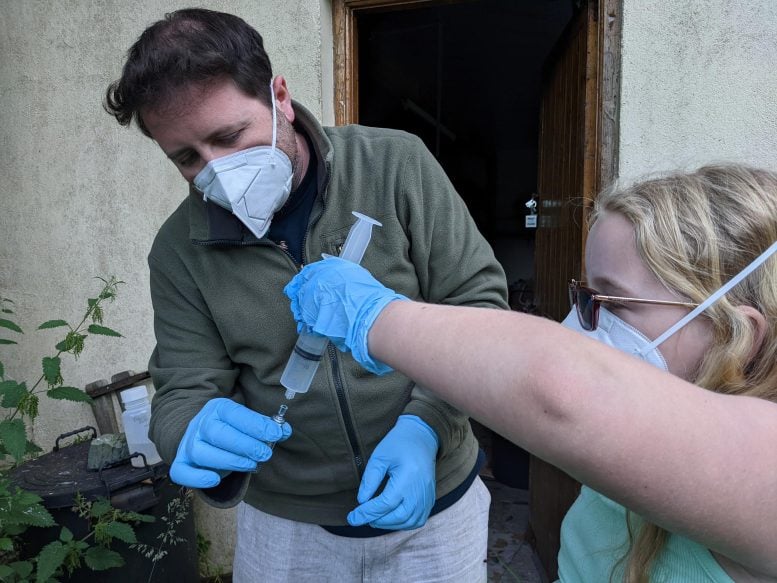
The scientists knew that human eDNA would end up in their turtle samples and probably many other places they looked. With modern genetic sequencing technology, it’s now straightforward to sequence the DNA of every organism in an environmental sample. The questions were how much human DNA there would be and whether it was intact enough to harbor useful information.
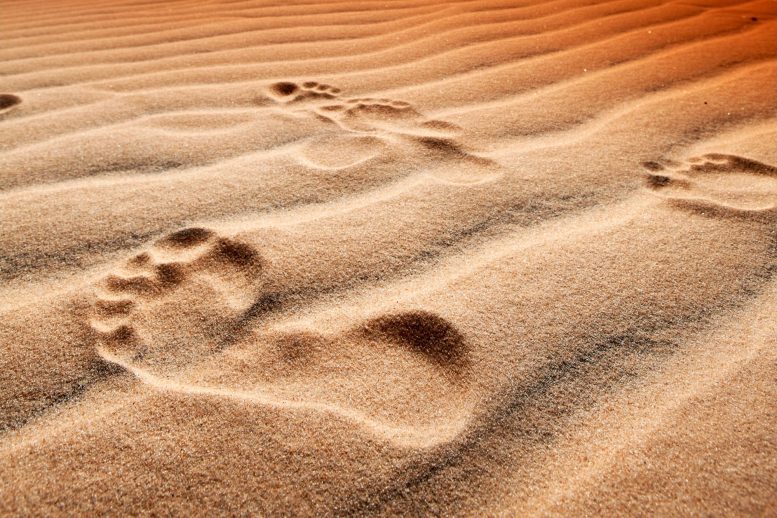
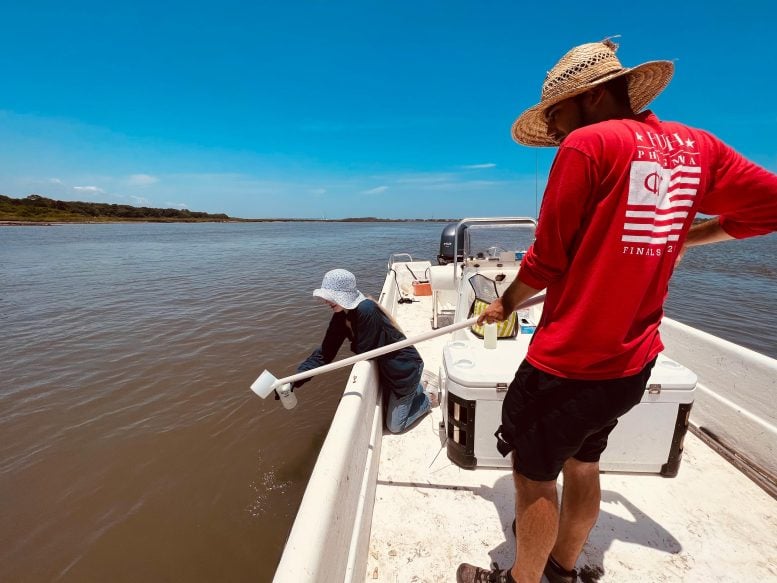
The team found quality human DNA in the ocean and rivers surrounding the Whitney Lab, both near town and far from human settlement, as well as in sand from isolated beaches. In a test facilitated by the National Park Service, the researchers traveled to part of a remote island never visited by people. It was free of human DNA, as expected. But they were able to retrieve DNA from voluntary participants’ footprints in the sand and could sequence parts of their genomes, with permission from the anonymous participants.
Duffy also tested the technique in his native Ireland. Tracing along a river that winds through town on its way to the ocean, Duffy found human DNA everywhere but the remote mountain stream where the river starts, far from civilization.
The scientists also collected room air samples from a veterinary hospital. They recovered DNA matching the staff, the animal patient, and common animal viruses.
Implications for Policy and Regulation
Now that it’s clear human eDNA can be readily sampled, Duffy says it’s time for policymakers and scientific communities to take issues around consent and privacy seriously and balance them against the possible benefits of studying this errant DNA.
“Any time we make a technological advance, there are beneficial things that the technology can be used for and concerning things that the technology can be used for. It’s no different here,” Duffy said. “These are issues we are trying to raise early so policymakers and society have time to develop regulations.”
Reference: “Inadvertent human genomic bycatch and intentional capture raise beneficial applications and ethical concerns with environmental DNA” by Liam Whitmore, Mark McCauley, Jessica A. Farrell, Maximilian R. Stammnitz, Samantha A. Koda, Narges Mashkour, Victoria Summers, Todd Osborne, Jenny Whilde and David J. Duffy, 15 May 2023, Nature Ecology & Evolution.
DOI: 10.1038/s41559-023-02056-2
Never miss a breakthrough: Join the SciTechDaily newsletter.
Follow us on Google and Google News.
1 Comment
Dangerous, hprofile criminals better run lol… or hide deep down in a hole at the top of a tall mountain where no souls ever go looking for anything. Don’t go out killing or raping no one now coz you’re gonna get caught in a heartbeat!
Speaking of crimes, the technology could also be used as a sort of “non-human” alibi to prove that you were not present at a certain location where you’re are being accused of being (spot of the crime). If your eDNA is not detected, then you were never there! Awesome.